

Ford Motor Co. is continuing to adapt its electric vehicle strategy with lessons learned from a tough Q1.
The automaker is delaying EV launches and will instead expand its hybrid offerings, as Model e, its electric vehicle segment, lost $1.3 billion during the quarter.
During the companyâs earnings call last week, Ford CFO John Lawler said when the âEV crazeâ began, it seemed like demand would long outlast supply.
âBut that was with the early adopters and they were willing to pay a higher price,â he said. âWhat we're finding with being in the marketplace is that EV prices are normalizing, and our early majority customers are not willing to pay a premium.â
The pricing takeaway was one of several things Ford executivesâ said they had learned while adjusting their EV strategy during Q1. Here are three more that stood out.
1. Ford assumed EV prices would come down 20%. It was wrong.
Ford entered the year anticipating that Model e prices would drop about 20% in Q1. But the discounts were much steeper than the company projected.
âWe had to take our prices down another 17% to remain competitive,â Lawler said. âWe've seen prices coming down quite dramatically, and that's why we haven't been able to keep up from a cost reduction standpoint.â
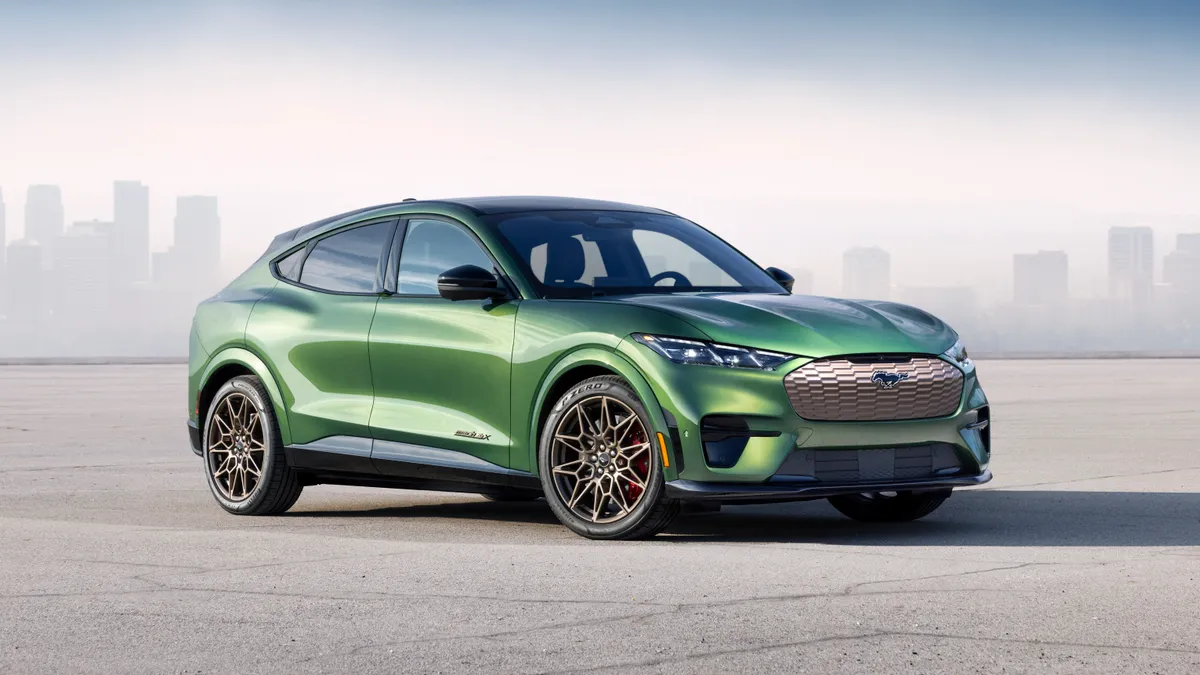
Ford has cut $5,000 of costs out of its Mach-E model, Lawler added, but revenue continues to drop faster than the company can reduce costs.
âWe're going to continue to work on driving every dollar of cost out of the business in the near term,â he continued, noting that if pricing stabilizes, some of those cost reductions could help the companyâs bottom line.
2. Ford places its bet on smaller, more affordable EVs
Ford believes EV adoption will grow the fastest among urban customers who seek out smaller, more affordable vehicles to drive short distances, CEO Jim Farley said during the call. He said the company can compete in that segment in a âunique way thatâs Ford.â
For example, when Ford dropped the price of one of its more expensive models, Mach-E, by 17%, volume went up 141%, Farley said.
âThat's telling us that the more affordable we can make great product, the more attractive it is to these mainstream EV adopters,â he said.
Notably, Farley called Fordâs new three-row crossover a âgreat product,â but the company is delaying its launch by two years to match the slower growth in EVs and to âsubstantiallyâ reduce battery costs for that vehicle.
3. Ford shoots for 12-month profitability standard
The good news is that Ford expects costs to be flat for its Model e division this year, creating a pathway to profitability.
Farley said the company expects each one of its EVs to be profitable within 12 months of launch, and it will do âeverything it takesâ to make that a reality.
âWeâre going to bet on commercial work vehicles where we do really well, where we know the customers and where we can innovate for them, like Pro Power Onboard, with partial and fully electric vehicles,â he said. âBut increasingly, our bet will be on our new small affordable platform developed by our team on the West Coast.â
In February, Ford revealed it had created a small, elite team to develop a low-cost electric vehicle platform. The technology will be a key part of the automakerâs revamped electrification strategy, Farley said at the time.