When it comes to U.S. automotive manufacturing, one state inevitably springs to mind: Michigan.
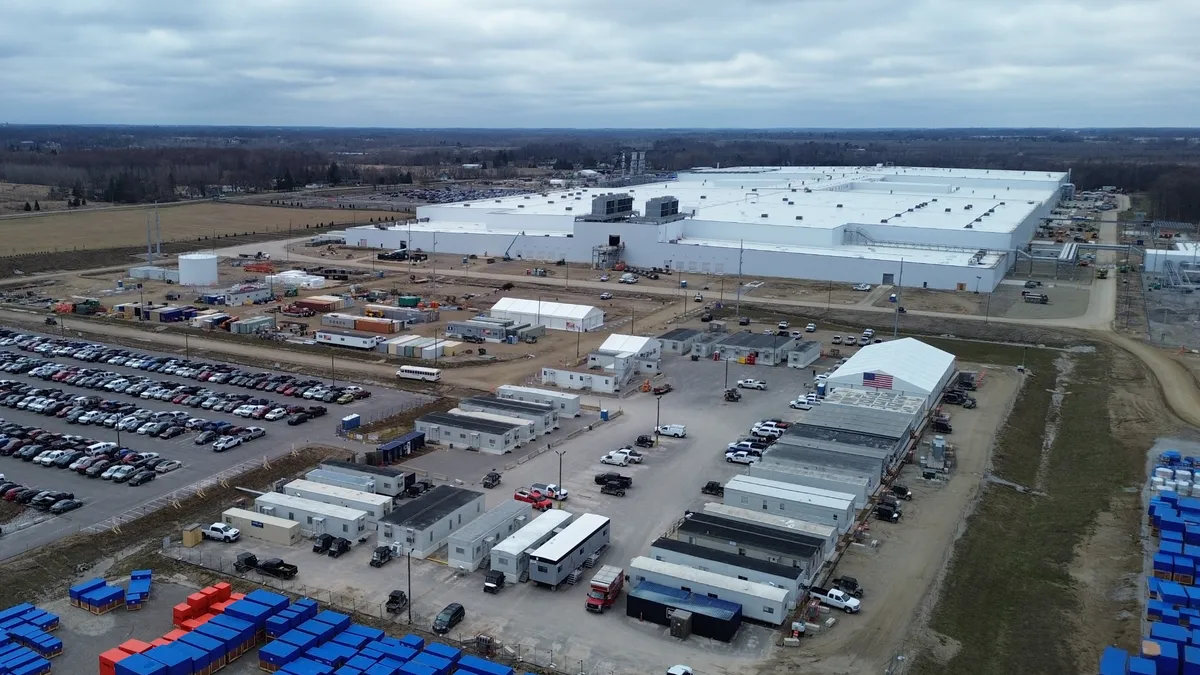
But as the industry races toward an electric future, Michigan faces competition from the Southeastâs burgeoning âbattery belt.â Electric vehicle and battery makers have flocked to the region in recent years, lured in part by a non-union workforce and proximity to the supply base in Mexico.
âThe South really jumped in and planted a flag. Part of that shift was around unionization, but those plants are starting to get unionized too,â said Bill Rayl, executive director of workforce solutions for the Michigan Manufacturing Association.
Despite this shift, experts see Michigan as a key player in the evolving automotive landscape. Rayl likened Michigan to the âbuckleâ of the battery belt, highlighting the stateâs legacy strengths â from deep auto manufacturing know-how to a robust talent pipeline and supply chain.
âAll things considered, Michiganâs got a lot going for it,â Rayl said.
Weathering uncertain market conditions
So far, the auto industryâs road to electrification has been a bumpy one, with consumer demand for EVs rising slower than anticipated, said Mike Wall, executive director of automotive analysis for S&P Global Mobility. The decline comes as the market reaches an all-time high in EV availability.
âEV programs right now are not hitting the volumes that were sort of promised to these suppliers, and it concerned us from the jump that this wasnât going to be a linear transition,â Wall said, adding that, âWeâre in this mushy middle, call it 2024 to 2027, 2028.â
However, Michigan may have an edge over states that have heavily invested in EVs. Legacy automakers in the state, such as Ford Motor Co., General Motors Co. and Stellantis, have a solid base of internal combustion vehicle production to support their operations while still investing in EVs for the long-term, according to Wall.
âIf youâre just building EV battery plants as far as the eye can see, if theyâre not getting that volume, you end up with cutbacks: pulling back on investment, layoffs,â Wall said. âNot to take anything away from the South, theyâve got internal combustion engines down there as well, but in terms of the preponderance, weâve got a long storied history in experience within that base camp â weâre no slouch on the EV side â but we do have a good blend.â
A leg up on industry know-how
From vehicle design to workforce training programs, Michiganâs roots in traditional automotive set it apart.
âWe know how to make cars, and now weâre shifting to make cars that run off of electricity,â Rayl said. âAn EV actually has fewer parts. Itâs a lot simpler to make than an ICE vehicle, so we have a lot of institutional knowledge on how to design, engineer and manufacture cars, which we get to take advantage of in this transition.â
Major automakers including General Motors and Ford, as well as global Tier 1 suppliers like Magna, Bosch and Denso, are based in Michigan, with dedicated R&D operations. Even automakers without a manufacturing footprint in the state, such as Toyota and Honda, maintain extensive R&D facilities there, said Jonathan Smith, senior chief deputy director for Michigan Department of Labor and Economy Opportunity.
For years, the Environmental Protection Agencyâs lab in Ann Arbor helped build local expertise in ICE and engineering skills for more fuel-efficient engines, while early battery investments by LG recruited battery engineers to the state, Smith said.
On the other hand, states attracting new auto and battery investments are starting from scratch in terms of having to build that base â including talent. Michiganâs workforce, however, is well-positioned to adapt quickly through new programs or upskilling run by training providers with decades of experience, according to Smith.
Enhancing that flexibility, experts say, is Michiganâs successful alignment of federal and state agencies, universities and local and private sector groups on developing EV-specific curricula. Multiple programs are already underway, with stakeholders leveraging existing workforce training infrastructure for deployment.Â
âMichigan has a strong history of workforce programming geared towards automotive production, and as we think about the shift to EVs, itâs not the first time weâve encountered technological or economic change,â Smith said. âWeâre used to responding quickly.â