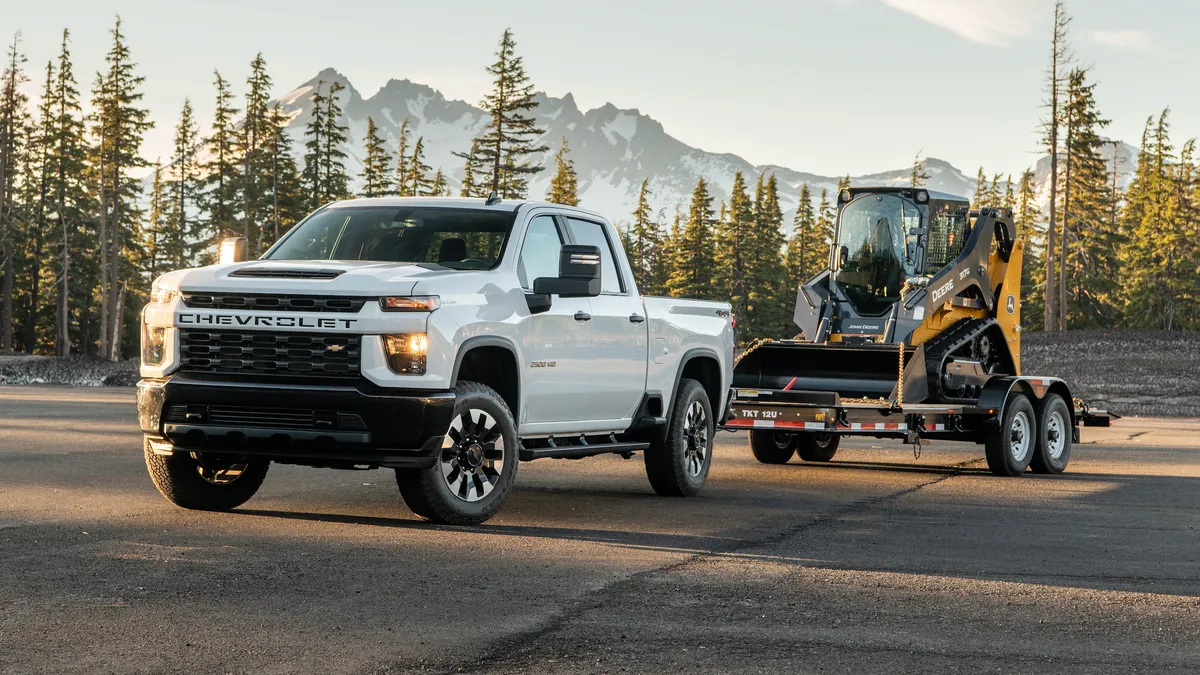



In September, Hyundai and General Motors signed a memorandum of understanding to collaborate on supply chains and other areas of production. The goal was to help the companies benefit from operational synergies and drive cost efficiencies, according to the release.
Part of the deal was combining sourcing efforts to secure and reduce the cost of raw materials, such as steel and materials needed to make EV batteries.
While partnerships between automakers have existed for years in the vehicle supply chain, collaborative purchasing alliances are less common, said Doug Mehl, partner and Americas lead of Automotive and Industrials at consulting firm Kearney.
Typically, collaborations are driven by combining research and development resources to advance technology and bring market programs to fruition, Mehl said. Collaborations can also lower costs and help secure stronger suppliers.
âThese partnerships are the most successful when they focus on combining resources to advance specific technologies or bring programs to market. Procurement is often just one of several elements of a partnership, but typically isnât the primary driver,â according to Mehl.
General partnerships are especially critical in the electric vehicle supply chain, which can be tricky to navigate due to the challenges of developing electric motors or battery systems, Alexandre Marian, a partner and managing director in the automotive and industrial practice at AlixPartners, told Supply Chain Dive. He added that more than two-thirds of partnerships are EV related.
Who benefits?
There are several examples of automakers participating in combined sourcing partnerships, especially in terms of EV supply chains. However, the strategy can benefit some companies more than others.
âOEMs need to do whatever they can to drive towards affordable electric vehicles,â Mehl said. âThe cost is too high today and almost all of them lose money on EVs. Collaborating on procurement is one lever to help, but for a large OEM it wonât be a game-changer and comes with organizational complexities.â
The collaborations can, however, leverage pooled resources. He added that a major pillar of an alliance between Renault, Nissan and Mitsubishi is shared procurement.
In terms of the Hyundai-GM partnership, for instance, Mehl said that the partnership could accelerate their supply chains by being able to âplace bigger bets with suppliers.â
âAs a supplier, if you know you have the backing from two OEMs you can push faster in mining, capital projects, technology developments, etc. Longer-term I wouldnât expect this collaboration to be meaningful,â he said. âEach has procurement organizations, and each has their own way of doing business.â
"These partnerships are the most successful when they focus on combining resources to advance specific technologies or bring programs to market."

Doug Mehl
Partner and Americas Lead, Automotive & Industrials at Kearney
The impact of a purchasing partnership also depends on the size of the OEM, Mehl said. For instance, larger companies have plenty of buying power, meaning the benefits of increased procurement reach often doesnât offset the cost of establishing the partnership.
âRather than squeezing the suppliers for more cost because of increased volume, the OEMs need to pursue other levers to extract value, such as increased supplier collaboration, optimizing technical specs, and finding value in the value chain,â Mehl said. âWeâve worked with several OEMs in this area, and this is where they achieve the most cost savings in procurement.â
Smaller, start-up OEMs â like Rivian or Lucid â may have a different experience, especially if the company struggles to onboard suppliers.
Due to lower and uncertain volumes, âthese companies would achieve significant savings from a collaboration,â Mehl said.
The challenges of purchasing partnerships
Significant challenges are associated with combined sourcing efforts, and a lot of these partnerships are unsuccessful â the primary challenge being company culture, said Mehl. Separate processes and operations can make partnerships difficult to execute which takes up management bandwidth.
Many of these partnerships fail, said Mehl. This is often due to differing company values and methods of operation.
âFor example, one OEM may value a lower piece-cost over all else while another OEM may look more holistically at a total landed cost and place a higher value on the technology development capabilities the supplier brings to the table. That makes it hard to agree on a supplier partner.â
But having a clear objective of the partnership goal can help mitigate issues, according to Marian. For instance, if two companies are entering into a partnership to secure raw material access, the focus needs to be on communicating that goal to all parties involved.
âThere are so many parties involved that when you announce a partnership. People don't necessarily understand what are the objectives of it, and they don't really see where they need to focus on to work on those ones,â Marian explained. He added that if the goal is not communicated well, incidents occur where youâll have engineers working on the same commodities, which slows down the process.
Despite the challenges when it comes to change â especially when traditional players are used to working a specific way â partnerships can also have a positive impact on companiesâ procurement operations and bottom lines.
The changes show existing players that change is possible through partnerships, especially when you have a clear objective, Marian said.
âThere is an opportunity to change and drive disruption within your own company you're able to do it properly,â he said.